Guide 02 / separate permissions
Photograph and handle ceramics with care
Viewing, photographing, touching, lifting, turning and publishing are different actions. Permission for one does not include the next.
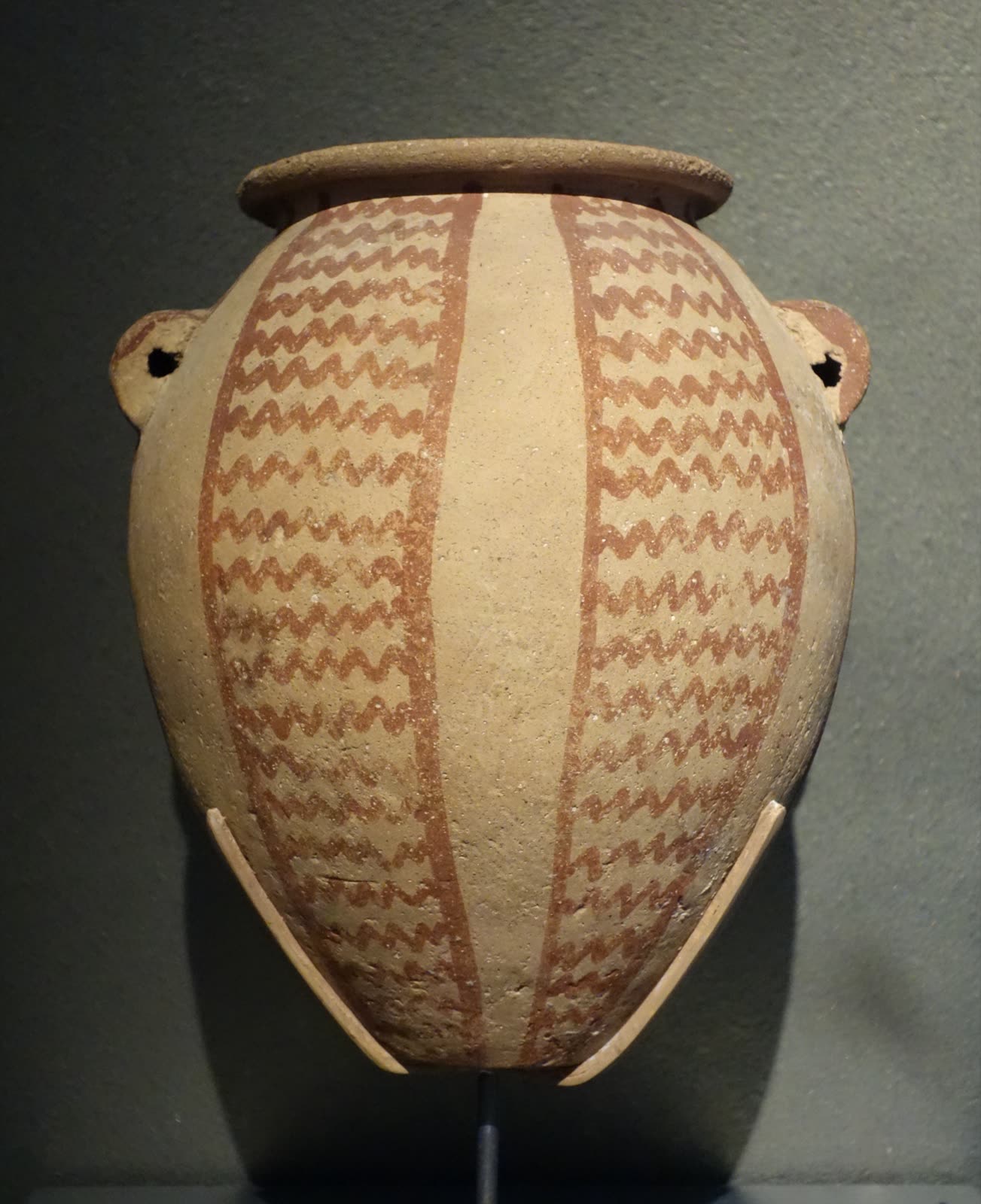

Start with the responsible rule
Museums, workshops, shops and private collections set their own conditions. Read signs and ask when uncertain. A visible object outside a case is not automatically touchable, and permission to photograph a room may exclude particular objects, people, flash, video or commercial publication.
Use distance before contact
Profile, pattern, sheen, repair and scale can often be studied from several permitted viewing angles. Move yourself rather than the object. Do not lean on cases, reach behind barriers or place a phone above an object where it could fall.
Permission ladder
View → photograph → touch → lift → turn → publish. Ask again before moving to a higher step. In a museum, the ladder may stop at viewing.
Photograph without false colour
Avoid flash where prohibited and be aware that display glass and lighting alter tone. Set exposure to preserve both light and dark surface detail, but do not use editing to invent uniform colour or remove wear. Include the label separately when photography is allowed, without obscuring it for other visitors.
Keep people and records private
Ask before making a maker, staff member, visitor or customer identifiable. Do not photograph private collection records, prices, payment, addresses or security details without permission. A person holding an object is still a subject whose consent matters.
If handling is explicitly offered
Follow the owner or responsible staff member’s instructions. Remove dangling items if requested, prepare a clear stable surface and use two hands. Support the body rather than a handle, rim or repaired projection unless directed otherwise. Lift only one object at a time and keep it low over the safe surface.
Do not test the material
Never scratch, tap, smell closely, wet, rub or test sound. These actions can damage a surface and do not provide reliable amateur authentication. Roughness, weight and ring are not shortcuts to age, clay source or firing method.
Turn only when permitted
The underside can preserve a base, label or firing trace, but turning introduces risk. Let the responsible person do it when possible. Do not rotate museum mounts, wet work, unstable fragments or objects with loose repairs.
Return the object exactly
Place it where instructed, in the same orientation and support. Do not rearrange a shelf for comparison or create a group photograph from unrelated pieces. Report any unexpected movement or damage immediately rather than concealing it.
Publish with attribution and limits
Name the maker, museum, object, place and date only as supported and permitted. Preserve image licence credit when reusing a Creative Commons photograph. Avoid claims of authenticity, market value, antiquity or symbolic meaning based on your handling or photograph.
Careful object study is not less intimate because touch is absent. The profile and surface remain available to sustained looking, while the object stays under the control of the people responsible for it.